A clean re-roof finish comes down to three things: keep nails moving into the dumpster during tear-off, sweep the whole property with a magnet in a slow grid pattern more than once, and walk the yard with the homeowner before the crew leaves. On the dumpster side, load level and at or below the fill line, keep the 60-foot path to the bin clear, and call KYN at least 24 hours before pickup.
Key facts
- Shingle roofing 20-yard: $550, 7 days, up to 3 tons flat, no overage
- Load at or below the marked fill line; overfill is $150 and can be refused at pickup
- Pickup notice: call at least 24 hours ahead
- Truck needs 60 ft of straight access and 22 ft of overhead clearance
- Blocked pickup (extra trip): $175; on-site relocation: $99
- Mixed loads: $135/ton over the allowance; prohibited items at the landfill: $250
- Driveway protection boards: free for every customer
A re-roof is judged twice: once when the new shingles go on, and again when the homeowner walks the yard after the crew leaves. A stray roofing nail in a driveway, a shingle tab in a flower bed or a dumpster that cannot be picked up on time can turn a good job into a callback. This guide covers the cleanup side of a re-roof in North Port, Port Charlotte, Punta Gorda and Englewood: how to keep nails under control, how to run a magnet sweep that actually works, and how to close out the job so the dumpster leaves the driveway on the first trip.
It is written for roofing crews and the homeowners who hire them. The dumpster rules and prices come straight from KYN's published terms; the cleanup routine is the crew's side of the job.
Why cleanup decides the review
The homeowner rarely sees the underlayment, but they always see the yard. A clean finish is the part of the job they can judge with their own eyes, which is why it shows up in reviews and referrals.
Roof tear-off debris is mostly shingles, felt and fasteners, and fasteners are the problem. Nails travel. They bounce off the drip edge, slide off tarps, ride in boot treads and end up in places nobody was working. The earlier article in this series, the roof tear-off dumpster guide, covers sizing and weight. This one starts where that one ends: the last day on site.
Before the first shingle comes off
Most cleanup problems are set up on day one, when the dumpster is placed and the ground is protected. A few minutes of setup saves an hour of searching later.
Place the bin where pickup is easy
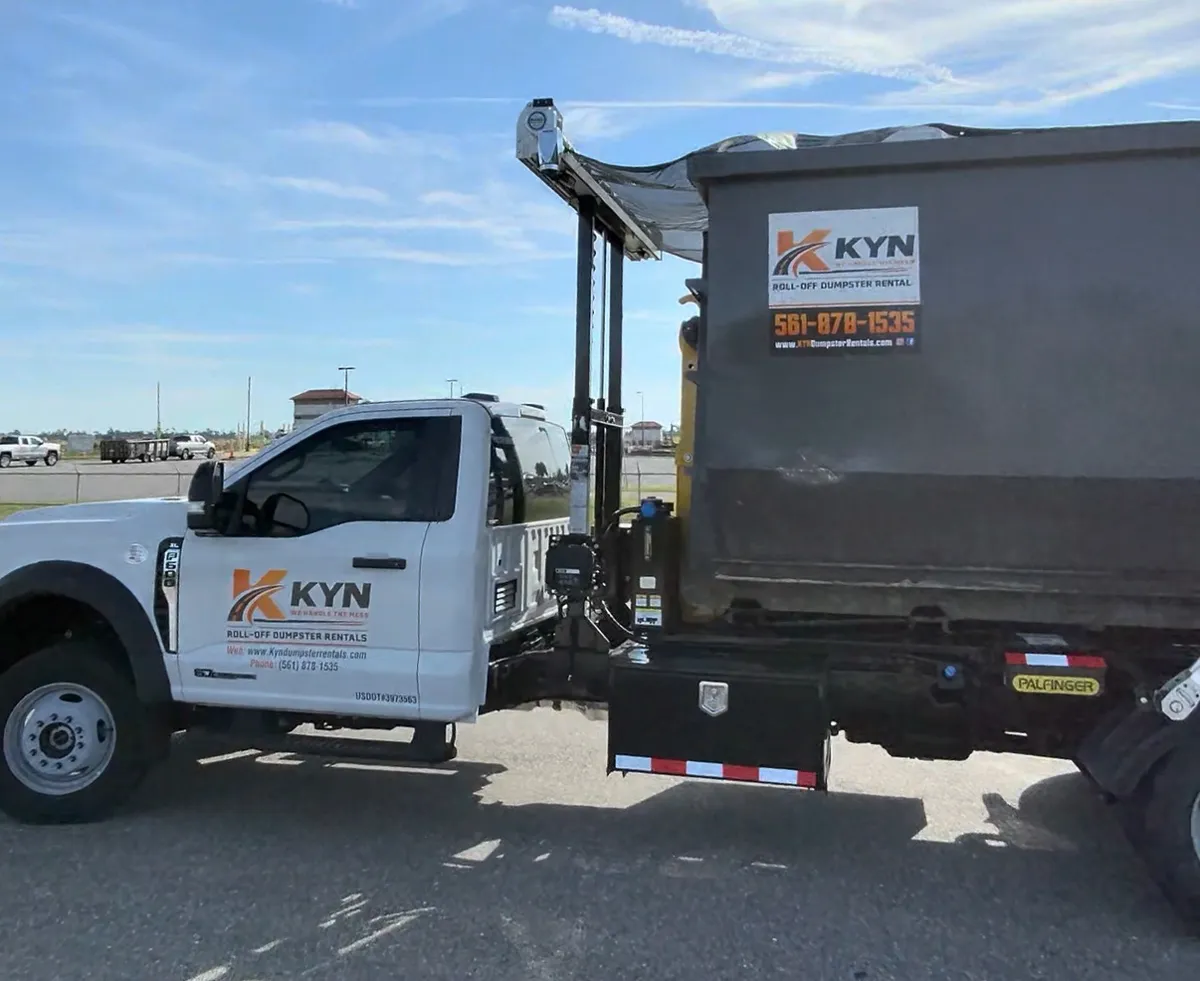
KYN's terms ask for at least 60 feet of straight, unobstructed access from the street to the dumpster and at least 22 feet of overhead clearance, with no low branches, wires or eaves. Think about pickup when you choose the spot, not only drop-off. A crew truck, a material trailer or a homeowner's car parked in that path on pickup day can block the truck, and a blocked pickup is billed as an extra trip ($175). If the bin has to move during the job, only KYN moves it, at $99 for a relocation on the same site.
Protect the driveway and the ground around it
Driveway protection boards are free for every customer; ask for them when you book. KYN is clear that boards cannot guarantee zero impact, especially on asphalt softened by Florida heat, so keep the area around the bin clean and avoid parking equipment on the same spot all week. Tarps on the ground around the dumpster catch the nails and scraps that miss the opening. Our driveway protection guide explains how the container sits on the boards.
Tarp the landscaping and the lanai
Beds, shrubs, pool cages and screened lanais collect debris that is hard to find later. Covering them before tear-off is faster than picking nails out of mulch. Keep pool areas and screen enclosures in mind when you plan which side of the roof to strip first.
During the tear-off: keep nails in the bin
Nails that go straight into the dumpster never have to be found. The goal during tear-off is to keep fasteners moving in one direction: off the roof and into the bin.
- Chute or controlled drops. Aim debris at the opening, not near it. Debris that lands on the rim scatters.
- Empty tarps often. A loaded tarp is heavy and spills when it is dragged. Lift and empty it into the bin before it gets full.
- Load flat, not in a peak. KYN's terms require material to be spread evenly; top-heavy or unbalanced loads are refused at pickup.
- Stay at or below the fill line. Shingle loads must not go above the top edge or the marked fill line. An overfilled dumpster can be refused at pickup and carries a $150 excess fill charge.
- Roofing debris only. Construction and demolition debris must be kept separate from household goods, furniture, carpet, fencing and yard waste. Weight over the allowance on a mixed load is billed at $135 per ton.
Hazardous items never go in the bin: no paint, fuel, oil, solvents or similar products. If the landfill finds prohibited items in the load, there is a $250 landfill rejection fee. The full list is in what can't go in a dumpster in Florida.
The magnet sweep that actually works
A rolling magnet works best when it is pushed slowly in a grid, more than once, over every surface where debris could have landed. One fast pass down the driveway is not a sweep.
Work in a grid
Divide the yard into strips about the width of the magnet. Push the magnet slowly down one strip and back up the next, overlapping each pass. Then repeat the whole area at a right angle to the first pattern. Nails that lie flat in grass or between pavers are easy to miss on a single pass.
Cover the places people forget
- The drip line all the way around the house, including behind shrubs.
- Mulch and rock beds, where a hand magnet often works better than a rolling one.
- Pool decks, lanais and the inside edge of screen enclosures.
- The swale, the street in front of the house and the neighbor's side of the property line.
- Gutters and downspout openings, which catch granules, tabs and fasteners.
- The ground under where the dumpster sat, after it is picked up.
Clean the magnet as you go
Empty the magnet into a bucket or straight into the dumpster before it is crowded. A full magnet stops picking up. Before the last load goes in, put the collected nails in the bin so they leave with the debris.
The final walkthrough
The final walkthrough is a slow lap around the property with the homeowner, after the sweep and before the crew leaves. It is the moment to catch what the magnet missed and to agree that the job is done.
- Driveway and walkways. Look along the surface at a low angle; nails and granules are easier to see that way.
- Beds and landscaping. Lift tarps carefully and check under them.
- Lanai, pool and screens. Check the deck, the pool edge and the bottom rail of the screen enclosure.
- Gutters. Confirm they are clear of shingle tabs and debris.
- The street and swale. Neighbors notice nails in front of their own driveway.
- The dumpster. Load level, at or below the fill line, doors closed, and nothing leaning against the container.
Take a few photos of the clean yard and the loaded bin for your own records. When KYN picks up, the driver completes a Pickup Condition Report that the customer signs, and that report confirms the final charges. A clean, level, properly loaded bin keeps that report simple.
Pickup day
Schedule pickup at least 24 hours ahead and make sure the truck can reach the bin. Those two steps prevent most pickup problems.
KYN's terms ask customers to call at least 24 hours before pickup; same-day pickup depends on availability. On a 24-hour roofing plan for approved contractor accounts ($450), plan the call before the tear-off day ends; a bin kept past 24 hours is billed at the Roofing 7-day rate ($550). The comparison is in 24-hour vs 7-day roofing dumpster.
On pickup day, clear the path: trailers, vehicles and material piles out of the 60-foot approach, and nothing under the 22 feet of clearance the truck needs. Weight is measured at a certified landfill or recycler scale, and a copy of the scale ticket is available on request. On roofing plans the price is flat up to 3 tons, with no overage charge; if the debris is going to pass 3 tons, call for a swap ($175) while the crew is still working.
From the owner
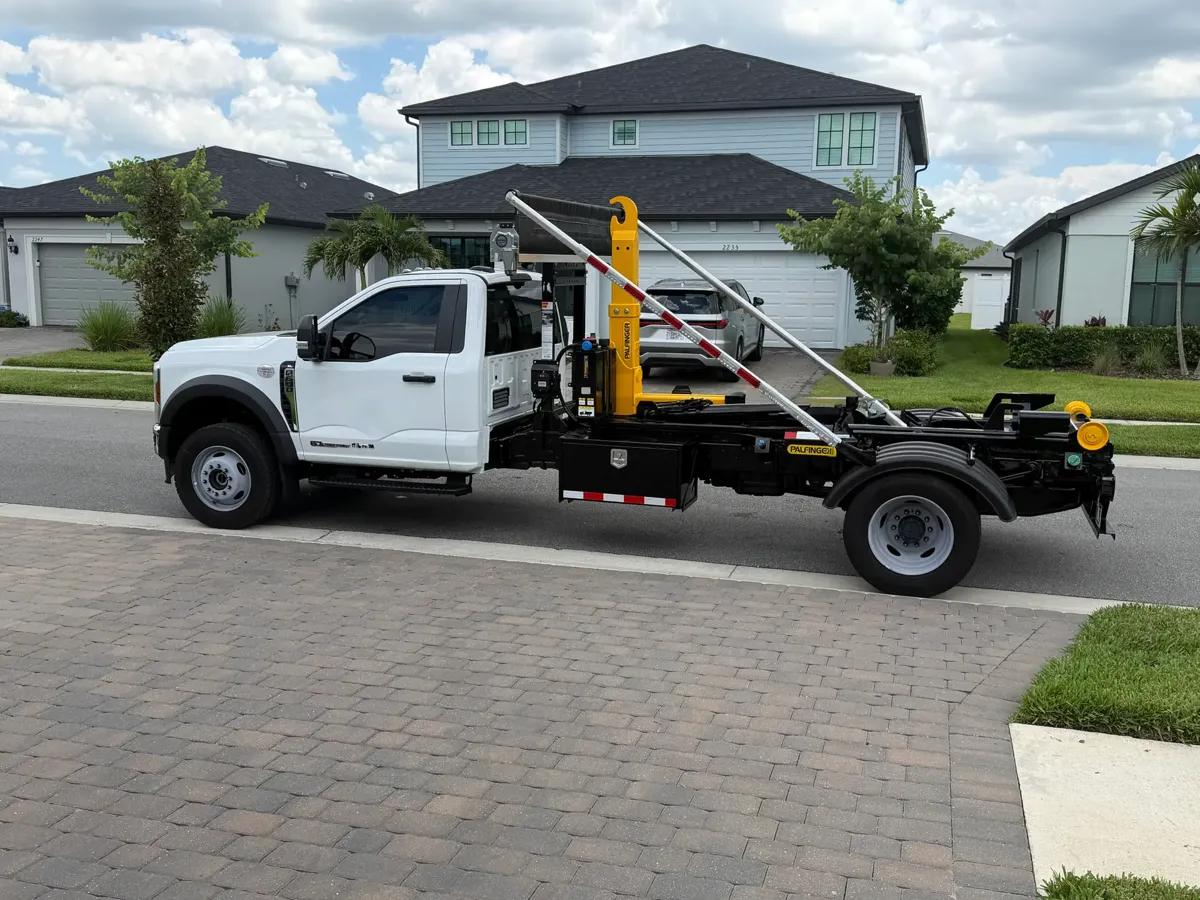
I deliver and pick up every KYN dumpster myself. A few things that make pickup day easy for everyone:
- Call me the day before. If I know when the crew is finishing, I can plan the route so the bin does not sit full on the driveway.
- Keep the path to the bin open. A trailer parked in front of the dumpster means I cannot load it, and nobody wants a second trip.
- Ask for driveway boards when you book. They are free, and they help, especially on hot asphalt.
- If the roof is heavier than expected, call during the day for a swap instead of stacking the bin higher.
Frequently asked questions
Does KYN sweep the yard for nails after a re-roof?
No. KYN delivers, picks up and disposes of the debris. The magnet sweep and the final walkthrough are part of the roofing crew's job.
How much notice does KYN need for a dumpster pickup?
Call at least 24 hours before pickup. Same-day pickup depends on availability.
What happens if the dumpster is overfilled?
Material must stay at or below the top edge or the marked fill line. An overfilled dumpster can be refused at pickup and carries a $150 excess fill charge.
What if a trailer or car is blocking the dumpster on pickup day?
The truck needs 60 feet of straight, clear access and 22 feet of overhead clearance. If the pickup is blocked, the wasted trip is billed at $175.
Can we throw leftover paint or sealant cans in the roofing dumpster?
No. Paint, fuel, oil, solvents and other hazardous products are prohibited. If the landfill finds prohibited items, there is a $250 landfill rejection fee.
Are driveway boards included?
Yes. Driveway protection boards are free for every customer. Ask for them when you book.
Who signs off at pickup?
The customer signs a Pickup Condition Report at pickup, and that report confirms the final charges.
Sources
- KYN Roll-Off — Terms & Conditions (sections 1, 3.1, 3.2 and 3.3)
- KYN Roll-Off — Pricing
- KYN Roll-Off — Contractor accounts
- KYN Roll-Off — Roof tear-off dumpster guide
- KYN Roll-Off — What can't go in a dumpster in Florida
Roofing crew in North Port, Port Charlotte, Punta Gorda or Englewood? Open a contractor account, download the contractor rate sheet, or call (561) 878-1535.